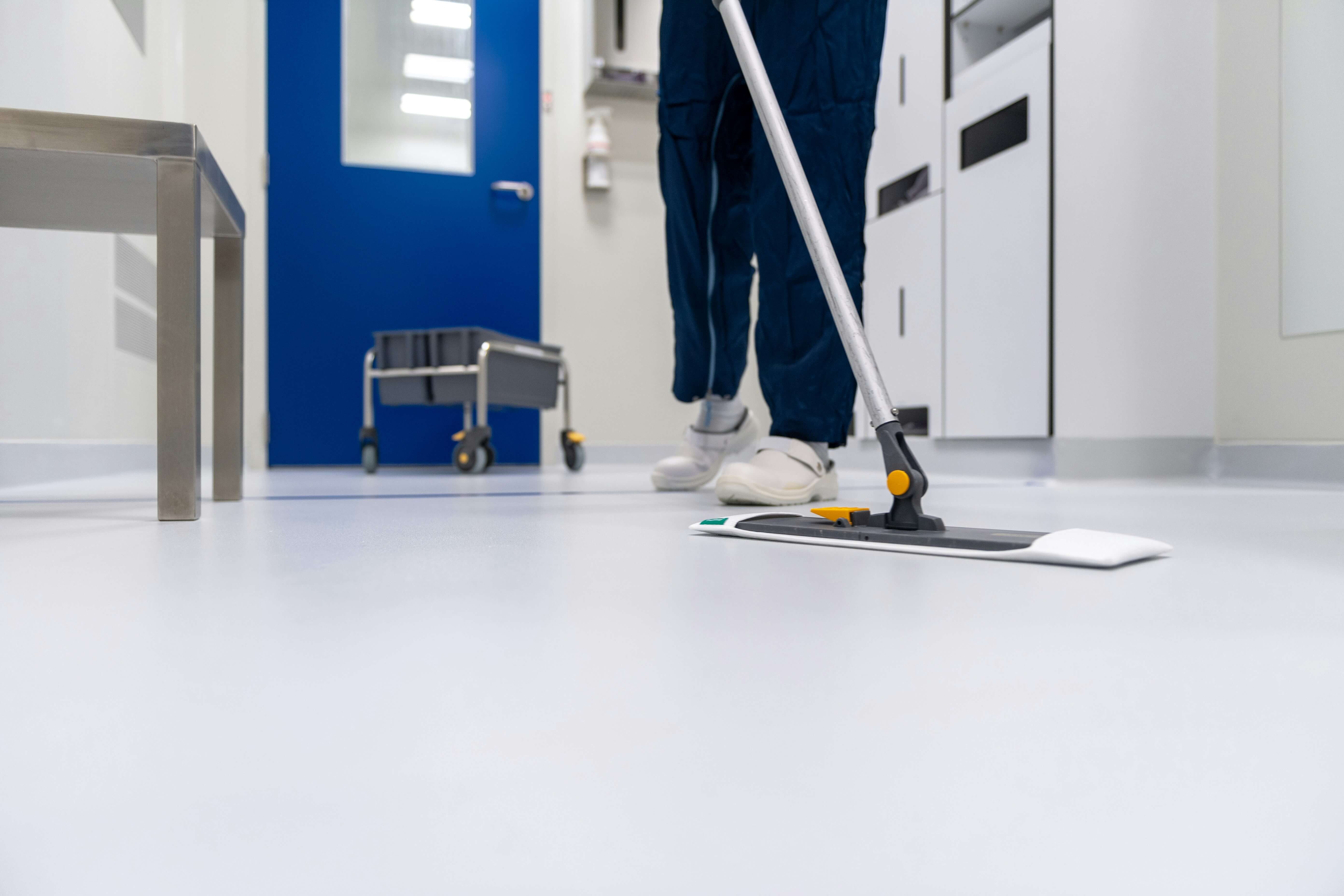
Post-Construction Cleaning Cost Estimator: Professional Guide to Bidding and Budgeting
In the final stages of any "dream place" project, the transition from a construction site to a livable or operable environment depends on professional finishing. Post-construction cleaning is a specialized service that removes the "hidden accumulated dust and grime" left behind by trade contractors, ensuring the property is move-in ready.
For contractors and property managers, accurate cost estimation in this phase is the "fundamental foundation" of maintaining project profitability. Errors in cleaning estimates often lead to "price uncertainty" and can cause a project to exceed its final budget. This guide details the technical requirements for mastering post-construction cleaning estimation using engineering-grade logic and site-proven formulas.
What Is a Post-Construction Cleaning Cost Calculator?
A post-construction cleaning cost calculator is a technical tool designed to predict the financial investment required to clean a site based on architectural dimensions, labor intensity, and material needs. These tools translate geometric data (square footage) into actionable procurement and labor plans, helping users "bid smarter" and avoid overpaying for services.
How Post-Construction Cleaning Costs Are Estimated
The internal logic of professional estimation follows a standardized chain: Physical Measurement → Gross Surface Area → Debris Assessment → Unit Rate Application → Final Estimate. Most professional services utilize one of three primary estimation methods:
- Per Square Foot: Multiplying the total floor area by a fixed cleaning rate.
- Per Hour: Calculating costs based on the total number of cleaner-hours required to finish the job.
- By Phase: Distributing costs across distinct stages of the project (Rough, Final, and Touch-up).
Factors That Affect Cleaning Costs
Cleaning a newly constructed or renovated site is significantly more complex than standard janitorial work. Several variables dictate the final cost:
- Project Size (Area): The primary variable. Larger spaces demand more labor and material consumption.
- Debris Level (1–3): Level 1 (Light) involves minimal dust; Level 2 (Moderate) includes scattered materials; Level 3 (Heavy) requires removing thick dust, paint splatter, and large leftover scraps.
- Site Accessibility: If a site is difficult to access for labor or equipment, the estimate must increase to cover the extra effort.
- Number of Floors: Verticality adds labor time as crews move equipment between levels.
- Location and Labor Rates: Rates vary by region. For instance, the professional rate in high-cost areas like Manhattan, NYC, is approximately $70 per hour per cleaner.
- Timeline: Accelerated schedules (e.g., finishing in two days vs. one week) require more simultaneous labor, often increasing costs.
Calculating Cleaning Area
Accuracy begins with professional measurement of the "built-up area".
Area = Length × Width
- Irregular Shapes: Divide complex floor plans into regular sections (rectangles, triangles) and sum them for a total project footprint.
- Unit Conversion: If using metric specifications, convert to Imperial using the factor: 1 m² = 10.7639 ft².
Average Cleaning Cost Benchmarks
While project-specific quotes are essential, estimators use these benchmarks for preliminary budgeting:
- Average Rate per Square Foot: Estimates can range from $0.10 to $0.50 per square foot, with some specialized scenarios reaching $0.16.
- Finishers Category Budget: In residential construction, the "Finishers" category (which includes cleaning-dependent stages like paint and tile) typically accounts for 16.5% of the total budget.
Cost Components: Labor, Materials, and Equipment
A transparent estimate must break down these three core areas:
Labor Costs
Labor is the largest expense in any cleaning project. Estimates should include:
- Base Hourly Wage: The direct pay for cleaners.
- Payroll Taxes: Social Security, Medicare, and unemployment (often estimated as a 15% rate).
- Overhead: Insurance, administrative salaries, and worker transportation.
Material and Cleaning Supply Costs
Standard detergents and consumables must be itemized. For large commercial projects, material costs can be a significant "direct cost" line item.
Equipment and Specialized Costs
Heavy-duty construction requires advanced machinery.
- Riding Scrubbers & Sweepers: For large-scale industrial or warehouse flooring.
- High Lifts: Required for cleaning windows or ceilings in "built-up areas" with high clearance.
- Disinfection & Steam Cleaning: Often requested as additional specialized services for healthcare or high-end residential sites.
Phases of Construction Cleaning
Estimates are frequently divided into distinct project milestones:
- Rough Cleaning: Performed after framing, plumbing, and electrical work are complete. Focuses on removing large debris and preparing for "finishers" like paint and flooring.
- Final Cleaning: The "spick and span" phase where every surface is detailed for the client.
- Touch-up Cleaning: A final pass conducted just before move-in to remove any dust that settled after the final clean.
Interior vs. Exterior Post-Construction Cleaning
While interior cleaning focuses on detail, exterior work has its own set of requirements:
- Interior: Includes cabinetry (inside and out), trim, windows, and floor finishes.
- Exterior: Often involves window cleaning (using different rates for interior vs. exterior glass), pressure washing façades, and clearing "puddle formations" or debris from walkways.
Worked Example: Calculating Post-Construction Cleaning Cost
Scenario (Example Assumptions):
- Area: 2,000 sq. ft.
- Debris Level: Moderate (Level 2)
- Hourly Rate: $18/hr
- Payroll Tax: 15%
- Overhead: $100
- Target Profit Margin: 20%
Step 1: Estimate Labor Hours
Using a baseline of 4 hours per 1,000 sq. ft., the base requirement is 8 hours. Adjusting for "Moderate" debris may increase this to 10 hours.
Step 2: Calculate Direct Labor
10 hours × $18/hr = $180
Step 3: Add Taxes and Overhead
- Taxes: $180 × 0.15 = $27
- Overhead: $100
- Total Direct Costs: $180 + $27 + $100 = $307
Step 4: Apply Profit Margin
$307 × 0.20 = $61.40
Step 5: Final Quote
$307 + $61.40 = $368.40
Common Estimation Mistakes to Avoid
- Mixing Units: Failing to convert measurements correctly leads to "massive estimation errors".
- Neglecting the Ceiling: Many estimators measure floor area but forget that dust accumulates on high ceilings and light fixtures.
- Ignoring Disposal Fees: Hauling away construction debris often requires separate disposal or landfill fees.
- Forgetting Taxes and Overhead: Skipping these non-labor costs can cut into your profit margin significantly.
- Underestimating Debris: Failing to account for Level 3 (Heavy) debris can result in a "short-load" of labor, delaying project completion.
Practical Tips for Accurate Estimates
- Measure "Inside" Dimensions: Measure actual surface areas, deducting buildings or sections that do not require cleaning.
- Verify Regional Rates: Always research labor rates per ZIP code to account for local market fluctuations.
- Start with a Clean Slate: Ensure the area is clear of "large and small debris" (rocks, twigs, scraps) before measuring depth or surface finish requirements.
- Add a Contingency: Professional estimators include a 10–15% contingency budget to cover unexpected tasks or mid-project changes.
Key Takeaways
- Accuracy protects margins: Use digital calculators to reduce the "manifold chances of making an error".
- Factor in the debris: The "Debris Level" (1-3) is the most critical variable for labor hour accuracy.
- Account for the "Finishers" category: Remember that cleaning represents a portion of the 16.5% budget allocated for architectural finishing.
- Transparency builds trust: Providing an itemized estimate for labor, materials, and equipment prevents future disputes.
Technical Appendix
A. Established Formulas
- Area (sq. ft.): Length × Width
- Tons to Lbs: Tons × 2,000
- Board Feet: (Length_ft × Width_in × Thickness_in) ÷ 12
- Square Meters to Feet: Area (m²) × 10.7639
B. Values from Authoritative References
- Standard NYC Rate: $70 per hour per cleaner
- Contingency Margin: 10–15%
- Profit Markup: 10–30%
- Standard HMA Density (Ref): 145 lb/ft³
- Concrete Wet-to-Dry Expansion: 52.4%
C. Example Assumptions
- Waste Margin: 5–10% for general site materials
- Curing Time: 24 hours for coatings/sealants
- Average Project Timeline: 6 months for a standard 1,000 sq. ft. build
D. Project-Specific Values
- Local Material Price: Aggregate/Asphalt prices typically range from $80 to $200 per tonne
- Cleaning Frequency: Phases can include Rough, Final, or Touch-up depending on the contract
Professional Disclaimer: Calculator results and guide information are intended for general planning and estimation purposes only. Actual cleaning requirements, labor rates, and costs may vary significantly based on unique site conditions, local building codes, debris types, and real-time labor productivity. Always consult with a professional cleaning estimator or project manager before finalized bidding.
Post Construction Cleaning Cost Calculator:
This post construction cleaning cost calculator helps you estimate labor, materials, and total cleaning costs for residential and commercial projects. Enter your project details — get a comprehensive budget breakdown.
🧹 Quick Formula:
Total Cost = (Labor Hours × Labor Rate) + Materials + Contingency
Example: 2,000 sq ft commercial space, standard cleaning
Labor: 16 hours × $35 = $560
Materials: $150
Contingency (10%): $71
Total: $781 ($0.39 per sq ft)
Understanding Cleaning Levels
Post construction cleaning has different levels based on the scope of work:
- Basic: Floor sweeping, surface dusting, general tidying.
- Standard: Deep cleaning, window cleaning, baseboards, light fixtures.
- Premium: Move-in ready, appliances, cabinets, detailed finishing.
- Industrial: Heavy debris removal, power washing, specialized equipment.
Debris Level Impact
The amount of debris affects labor hours significantly:
- Light: Dust and small debris — standard time.
- Medium: Construction dust, drywall residue — 20-30% more time.
- Heavy: Large debris, paint drips, adhesive residue — 40-60% more time.
Real-World Cleaning Cost Examples
- Residential condo (1,000 sq ft, standard): $350–$500
- Commercial office (2,500 sq ft, standard): $800–$1,200
- Retail store (1,500 sq ft, premium): $700–$1,000
- Industrial warehouse (5,000 sq ft, industrial): $2,500–$4,000
📋 Real Project: Commercial Office Cleanup
Project: 3,000 sq ft office renovation, Austin, TX | Date: July 2025
📐 Cost Breakdown:
Square footage: 3,000 sq ft
Cleaning level: Standard (deep clean)
Debris level: Medium
Labor: 20 hours × $35/hr = $700
Materials: $250 (supplies, equipment)
Contingency (10%): $95
Total: $1,045 ($0.35 per sq ft)
Actual quote from cleaner: $1,100 — calculator estimate within 5%
5 Common Cleaning Cost Mistakes
- Underestimating labor hours: Post construction cleaning takes 2-4 hours per 1,000 sq ft.
- Forgetting materials cost: Supplies, equipment rental, and disposal fees add up.
- Not adding contingency: Always add 10-15% for unexpected debris or delays.
- Ignoring debris level: Heavy debris significantly increases labor time.
- Not getting multiple quotes: Prices vary widely between cleaning companies.
🔧 Cleaning Cost Troubleshooting
Common cleaning cost estimation problems and solutions.
❌ "My cleaning quote is much higher than the calculator"
→ Cleaning companies include overhead, insurance, and profit margins. Get 3-5 quotes for comparison.
❌ "The cleaning took longer than estimated"
→ Underestimated debris level or scope. Add 20-30% more time for heavy debris or detailed work.
❌ "Materials cost was higher than expected"
→ Ask the cleaning company for a detailed materials breakdown. Some companies include materials in the labor rate.
Frequently Asked Questions
How much does post construction cleaning cost?➕
Post construction cleaning costs $0.15–$0.50 per square foot on average. A 2,000 sq ft home costs $300–$1,000 depending on cleaning level and debris.
What is included in post construction cleaning?➕
Standard cleaning includes floor sweeping/mopping, surface dusting, window cleaning, baseboards, light fixtures, and trash removal. Premium includes appliances, cabinets, and detailed finishing.
How long does post construction cleaning take?➕
Typically 2-4 hours per 1,000 sq ft for standard cleaning. Heavy debris or premium cleaning can take 4-8 hours per 1,000 sq ft.
Should I clean before or after flooring installation?➕
Clean after all major construction is complete, including flooring, painting, and cabinetry installation. Final cleaning should be the last step before move-in.
Can I do post construction cleaning myself?➕
Yes, but it's time-consuming and requires specialized equipment for dust removal and deep cleaning. For large projects, professional cleaners are recommended.