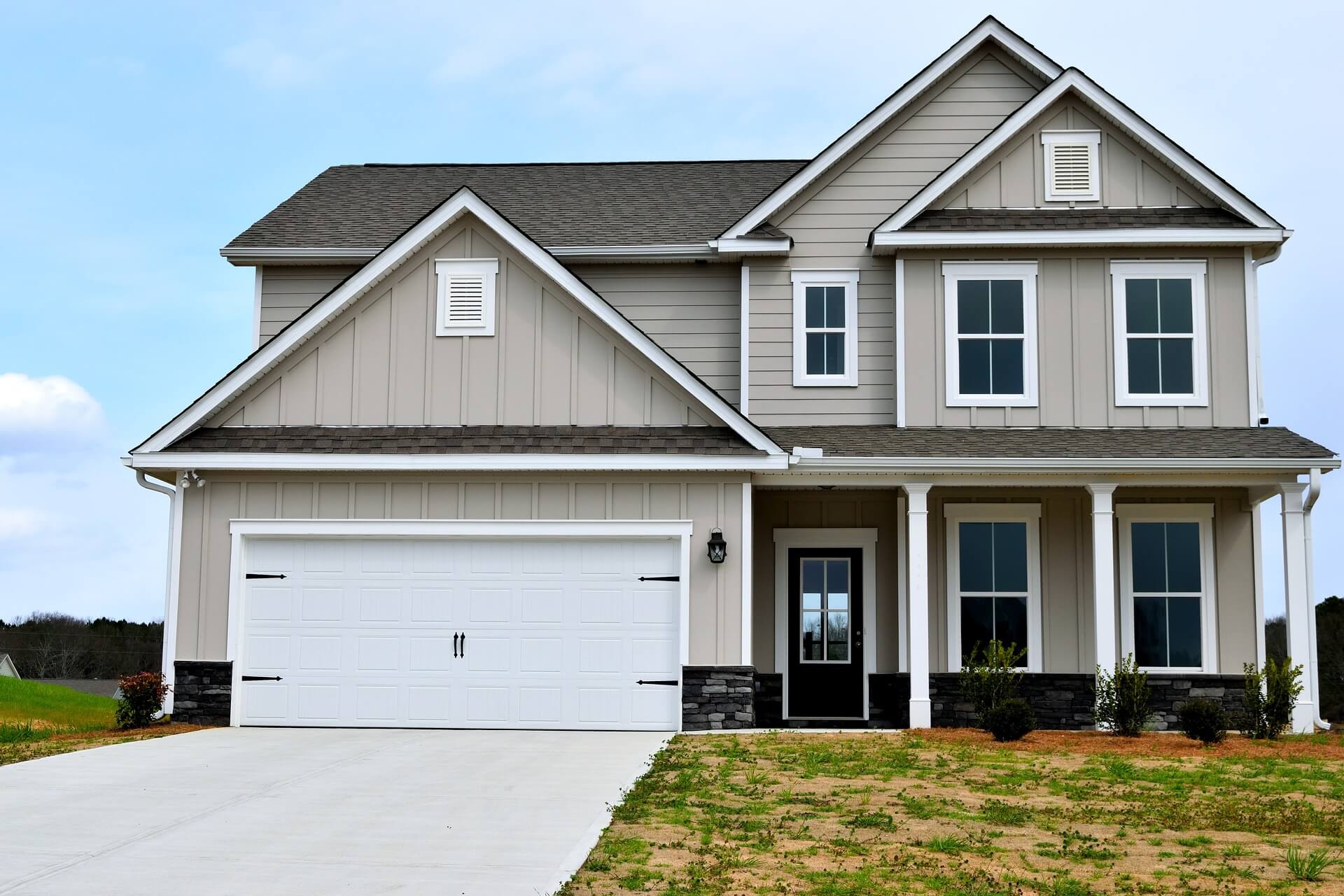
Garage Construction Cost Calculator: A Professional Guide to Estimating and Bidding
In the discipline of civil engineering and residential development, accurate planning is the fundamental foundation of every successful construction project[cite: 1]. Whether you are a property developer managing a multi-unit site or a homeowner finishing a "dream place," knowing your material quantities and expected costs before work begins helps reduce financial risk and improve project profitability[cite: 1].
A garage construction cost calculator is a technical methodology or digital tool that predicts total expenditures by translating architectural dimensions into an actionable procurement and labor plan[cite: 1]. Precision in these pre-construction calculations is the primary defense against "price uncertainty," expensive mid-job material shortages, and significant logistical waste[cite: 1].
How Garage Construction Costs Are Estimated
Professional estimating follows a standardized engineering chain: Blueprints → Quantity Takeoff → Unit Rate Application → Indirect Cost Loading → Contingency Application → Final Bid[cite: 1].
Estimators reconcile the geometric volume of the structure (the "built-up area") with the market price of its constituent parts[cite: 1]. This involves reviewing architectural drawings to identify missing scope items and calculating accurate material quantities for each CSI division (Concrete, Masonry, Wood, etc.)[cite: 1].
Average Garage Construction Cost per Square Foot
While actual costs depend on unique site conditions and architectural specs, professional estimators use established benchmarks for budgeting[cite: 1]:
- Residential Construction Range: Costs typically vary from $85 to $120 per square foot[cite: 1].
- Regional Variation: Regional labor rates play a major role; for example, the professional rate for finishers in high-cost areas like Manhattan, NYC, is approximately $70 per hour[cite: 1].
- Quality Grade: Finishes represent a massive variable; costs are categorized into Economy, Standard, Premium, and Luxury based on desired finishes[cite: 1].
Factors That Affect Garage Construction Costs
Several variables dictate the final investment required[cite: 1]:
- Garage Size (Area): Larger spaces demand more material and labor, but the cost per square foot often decreases as size increases due to economies of scale[cite: 1].
- Attached vs. Detached: Attached garages may share an existing wall but require more complex structural integration and fire-rating[cite: 1]. Detached garages require four full walls and often more extensive site preparation[cite: 1].
- Single-Car vs. Two-Car: A standard single-car garage is roughly 240 sq. ft. (12'x20'), while a two-car garage is typically 400–480 sq. ft. (20'x20' or 24'x20')[cite: 1]. Doubling the car capacity does not always double the cost, as some fixed costs (permits, delivery fees) remain similar[cite: 1].
Component Cost Breakdown: A Technical Analysis
A professional budget is divided into distinct project phases, each using specific mathematical formulas for estimation[cite: 1].
1. Site Preparation, Excavation, and Grading
Excavation is the process of removing earth to conform spaces for foundations[cite: 1].
Volume Calculation:
Volume = Length × Width × Depth[cite: 1]
Density Factor: Compacted subgrade must reach at least 95% density to prevent "future settlement" and puddle formation[cite: 1].
2. Foundation and Concrete Slab Costs
Concrete is a composite material of aggregates bonded with cement[cite: 1].
- The 52.4% Rule: In civil engineering, it is a known fact that the wet volume of a mix is 52.4% higher than its dry volume because water fills air voids between particles[cite: 1].
- Mix Proportions: A common foundation mix is M15 (1:2:4), representing 1 part cement, 2 parts sand, and 4 parts stone[cite: 1].
- Quantities: One standard 50 kg bag of cement occupies 0.035 cubic meters[cite: 1].
3. Reinforcement Steel (Rebar)
RCC (Reinforced Cement Concrete) uses rebar to counteract tensile stresses[cite: 1].
The Weight Shortcut:
Use the D² ÷ 162 rule to find the weight per meter in kg, where D is the bar diameter in millimeters[cite: 1].
Example: A 12mm rebar weighs approximately 0.888 kg/m[cite: 1].
4. Framing and Structural Costs
For wood framing, estimators calculate volume in Board Feet (BDFT)[cite: 1].
BDFT Formula:
Board Feet = (Thicknessin × Widthin × Lengthft) ÷ 12[cite: 1]
Steel Studs: In some regions, steel studs are used to avoid warping[cite: 1]. Steel density is standardly estimated at 7,850 kg/m³[cite: 1].
5. Roofing, Siding, and Finishing
- Roofing: Estimated by "squares" (100 sq. ft.)[cite: 1].
- Finishers Category: In a typical residential budget, the "Finishers" category (paint, tiles, bricks) accounts for 16.5% of total costs[cite: 1].
- Paint Efficiency: Professional grade paint typically covers 350–400 sq. ft. per gallon, but porous surfaces like new drywall may require 20% more material[cite: 1].
Labor and Contractor Costs
Labor is often the largest line item, involving both direct and indirect costs[cite: 1].
- Direct Labor: Physically performing the work (laying bricks, pouring concrete)[cite: 1].
- Labor Burden: A professional estimate must account for payroll taxes (approx. 15%), insurance, and benefits[cite: 1].
- Productivity Rates: Estimators calculate man-hours based on task complexity; for instance, a baseline of 4 hours per 1,000 sq. ft. might be used for site prep[cite: 1].
Permits, Fees, and Indirect Costs
- Soft Costs: Architectural design fees typically represent 8% of the total project[cite: 1].
- Regulatory Fees: Permits and insurance must be researched per local jurisdiction[cite: 1].
Contingency and Unexpected Costs
Mathematical formulas assume a "perfect" geometric world, but site conditions vary[cite: 1].
- The Waste Factor: Professionals typically add 5% to 6% to concrete and asphalt orders and 10% to bricks and tiles[cite: 1].
- Contingency Budget: Always include an extra 10% to 15% budget for unexpected risks, price fluctuations, or mid-project changes[cite: 1].
Worked Example: Estimating a Two-Car Garage
Scenario (Example Assumptions): A detached two-car garage, 24' long and 20' wide (480 sq. ft.), with a 4" thick concrete slab[cite: 1].
- Concrete Cost: $120 per cubic yard[cite: 1]
- Waste Factor: 10%[cite: 1]
- Calculate Slab Volume: 24 × 20 × 0.333 ft (4 inches) = 159.84 cubic feet[cite: 1]
- Convert to Cubic Yards: 159.84 ÷ 27 = 5.92 cubic yards[cite: 1]
- Apply Waste Factor: 5.92 × 1.10 = 6.51 cubic yards[cite: 1]
- Material Cost: 6.51 × $120 = $781.20[cite: 1]
- Total Estimate: Applying a standard benchmark of $100/sq. ft. for the total build: 480 × 100 = $48,000[cite: 1]
Common Estimation Mistakes to Avoid
- Mixing Unit Systems: Entering dimensions in centimeters but calculating pricing in feet leads to "massive estimation errors"[cite: 1].
- Ignoring the "Plus One" Rule: When calculating framing, forgetting to add the "starter" stud or joist results in a short-load of material[cite: 1].
- Confusing Ton vs. Tonne: A US short ton (2,000 lbs) is lighter than a metric tonne (1,000 kg/2,204 lbs), leading to a 10% shortage on large orders[cite: 1].
- Neglecting Deductions: Measuring an entire property without subtracting internal buildings leads to significant over-ordering[cite: 1].
Practical Tips for Reducing Costs
- Driveway Materials: Consider blacktop (asphalt concrete with a high aggregate-to-bitumen ratio) as a less durable but more affordable alternative to cement concrete for driveways[cite: 1].
- Reuse Base Material: In replacement projects, existing gravel or crushed stone base layers can sometimes be reused if they are "nicely packed" and free of debris[cite: 1].
- Order Locally: Materials sourced from local pits and yards matched by ZIP code minimize transportation fees[cite: 1].
Key Takeaways
- Accuracy protects profit: Accuracy reduces errors "manifolds" and builds customer trust[cite: 1].
- Density bridges volume and mass: Whether it is asphalt (145 lb/ft³) or steel (7,850 kg/m³), density is the critical variable for ordering by weight[cite: 1].
- Always factor in waste: Order 5–10% extra to avoid expensive mid-job stoppages[cite: 1].
- Phased Bidding: Break the project into phases (Excavation, Foundation, Finishers) for better resource allocation[cite: 1].
Technical Reference Appendix
A. Established Formulas
- Geometric Volume: Length × Width × Depth[cite: 1]
- Board Feet (Lumber): (Tin × Win × Lft) ÷ 12[cite: 1]
- Rebar Weight (kg/m): D² ÷ 162[cite: 1]
- Tonnage (Asphalt): (Areayd² × 9 × Thicknessin × Densitylb/ft³) ÷ 24,000[cite: 1]
B. Values from Authoritative References
- Concrete Expansion (Wet-to-Dry): 52.4% higher dry volume[cite: 1].
- Standard Steel Density: 7,850 kg/m³[cite: 1].
- Standard HMA Density: 145 lb/ft³[cite: 1].
- Sand Density (Dry Loose): 1,550 kg/m³[cite: 1].
- Aggregate Density (Dry Loose): 1,350 kg/m³[cite: 1].
C. Example Assumptions
- Wastage Factor: 5% for general construction; 10% for tiling/bricks[cite: 1].
- Labor Tax Rate: 15%[cite: 1].
- Contingency Margin: 10–15%[cite: 1].
- Standard Door Deduction: 17.78 sq. ft.[cite: 1]
- Standard Window Deduction: 6.0 sq. ft.[cite: 1]
D. Project-Specific Values
- Optimal Binder Content: Typically 4.5% to 7.5% (Must be determined by lab mix design)[cite: 1].
- Material Pricing: Typically ranges from $80 to $200 per tonne based on regional oil prices[cite: 1].
- Concrete Grade: M15 or M20 proportions as specified by the structural engineer[cite: 1].
Professional Disclaimer: Garage construction calculator results and these guidelines are intended for general planning and estimation purposes only[cite: 1]. Actual material requirements, labor rates, and costs may vary significantly based on unique site conditions, local building codes, substrate moisture content, and real-time application efficiency[cite: 1]. Always consult with a licensed professional engineer or professional estimator before placing final material orders or beginning construction[cite: 1].
Garage Construction Cost Calculator:
This garage construction cost calculator helps you estimate total project costs including foundation, framing, and finishing. Enter your garage details — get a comprehensive budget estimate.
🏗️ Quick Formula:
Area = Width × Depth
Base Cost = Area × Cost per sq ft
Foundation = Base × Foundation %
Total Cost = Base + Foundation + Finishing + Framing
Example: 24' × 24' attached garage, standard finish
Area = 576 sq ft
Base @ $90/sq ft = $51,840
Foundation (20%) = $10,368
Total: $62,208
Understanding Garage Construction Costs
Garage construction costs are typically broken down into these components:
- Foundation: 15-25% — concrete slab, footings, and site prep
- Framing: 30-40% — walls, roof structure, and lumber
- Finishing: 25-35% — drywall, insulation, electrical, doors
- Labor: 10-20% — skilled and unskilled labor
Cost Factors by Type and Finish
- Detached: Higher foundation cost, independent structure
- Attached: Share wall with house, lower overall cost
- Basic: No insulation, minimal drywall
- Standard: Insulated, drywall, basic electrical
- Finished: HVAC, epoxy floors, high-end doors
- Premium: Workshop, custom finishes, high-end materials
Real-World Garage Cost Examples
- 20' × 20' detached (standard): $28,000–$40,000
- 24' × 24' attached (standard): $38,000–$55,000
- 24' × 24' 2-story (finished): $60,000–$85,000
- 30' × 40' workshop (premium): $80,000–$130,000
📋 Real Project: Detached Garage
Project: Detached garage construction, Austin, TX | Size: 24' × 28' | Finish: Standard
📐 Cost Breakdown:
Area: 672 sq ft
Base cost: 672 × $92 = $61,824
Foundation (22%): $13,601
Framing (35%): $21,638
Finishing (28%): $17,311
Total: $62,208
Cost per sq ft: $92.57
Actual bid: $65,000 — estimate within 5%
5 Common Garage Cost Mistakes
- Underestimating foundation costs: Soil conditions affect foundation costs significantly.
- Forgetting electrical and plumbing: Add 5-10% for utilities.
- Not including permits: Building permits add $500-$2,000.
- Ignoring site preparation: Clearing, grading, and access add costs.
- Underestimating finishing costs: Insulation, drywall, and paint add up.
🔧 Garage Cost Troubleshooting
Common garage cost estimation problems and solutions.
❌ "My garage quote is much higher than the calculator"
→ Contractors include site prep, permits, and overhead. Get 3-5 quotes for comparison. Adjust the finish level and region settings.
❌ "Foundation costs seem too low"
→ Foundation costs vary by soil type and depth. Add 20-30% for poor soil conditions or stem walls.
❌ "Finishing costs are higher than expected"
→ Insulation, drywall, electrical, and doors add significant cost. Use the finish level selector to adjust rates.
Frequently Asked Questions
How much does a garage cost per square foot?➕
Garage construction costs $50-$150+ per square foot depending on type, finish, and region. Standard attached garages cost $75-$110/sq ft.
Is it cheaper to build a detached or attached garage?➕
Attached garages are generally 10-20% cheaper because they share a wall and foundation with the house.
How much does a 2-car garage cost?➕
A 2-car garage (24' × 24') costs $35,000-$55,000 for attached, $40,000-$65,000 for detached at standard quality.
What is the cheapest way to build a garage?➕
Choose a slab foundation, simple roof design, basic finishes, and do some work yourself. Carports are the cheapest option.
How much does a 2-story garage cost?➕
A 2-story garage costs 50-70% more than a single-story garage. A 24' × 24' 2-story garage costs $55,000-$85,000 depending on finish.